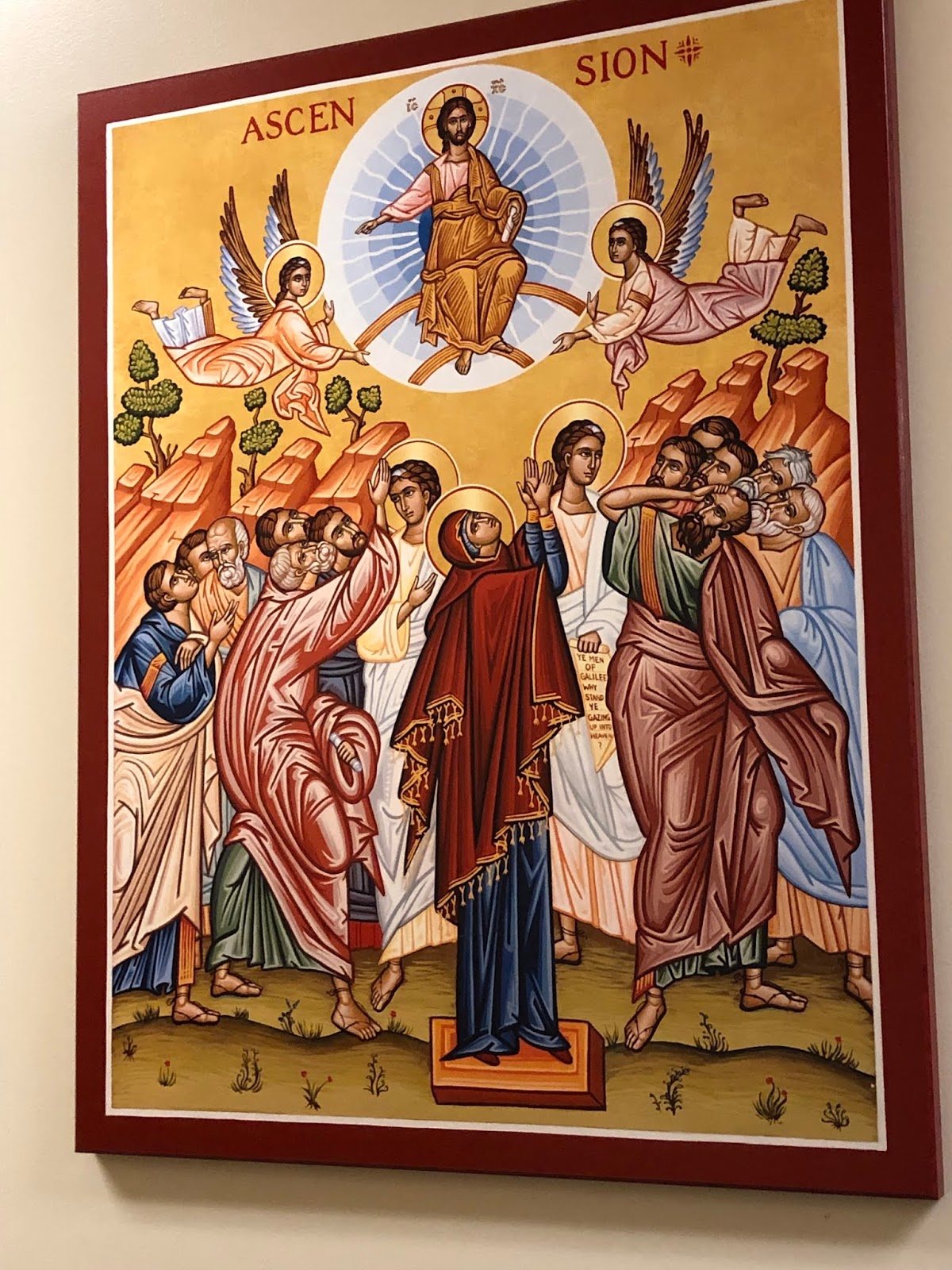
Our parish was having a blood drive yesterday and I was happy to find out I’m a candidate for a higher level of donation, called Power Red. I have one of the blood types they require, and also the absence of any anemia and a very healthy medical history. So glad to be able to give more. The only drawback? Between recovering from travel and blood donation, I’ve been sleeping a lot more than usual this week.
Wednesday, June 16, 2021
Power Red
Our parish was having a blood drive yesterday and I was happy to find out I’m a candidate for a higher level of donation, called Power Red. I have one of the blood types they require, and also the absence of any anemia and a very healthy medical history. So glad to be able to give more. The only drawback? Between recovering from travel and blood donation, I’ve been sleeping a lot more than usual this week.
Sunday, January 03, 2021
Reflection on a 400-year old poem
I am thankful for the opportunity to write for our new parish magazine. They invited me to write a reflection on the poem and due date was thanksgiving. Thank you to Husband who edited.
A
Reflection on Robert Southwell's The
Nativity of Christ
by Ana Braga-Henebry,
M.A.
After almost five centuries, this small poem by the English Catholic poet and
martyr St. Robert Southwell, SJ comes to our aid. Curious that a poem about the
Nativity speaks of despair, weeping, deafness and dumbness, death and darkness.
Yet these themes are much around us in 2020.
Let us remember that his age was also full of fear,
darkness, sickness, and more: persecution, torture, and execution. These loomed
every day in the life of Fr. Southwell and the other missionary priests who
dared to teach and practice the Catholic faith in Elizabethan England.
His lines, written in prison while he awaited execution,
bring us today what he was able to bring then to his readers, mostly fellow
prisoners. They were all martyrs for their beloved Catholic faith, in a time
and place when religious liberty was but a faint hope. Southwell made this hope
alive in his verses.
The first stanza ponders the mystery of Christ incarnate,
born a tiny baby and laid upon the hay, feeble. The saving action of God at
work through the mire and mess of our human condition. What can bring more hope
than the Nativity of Christ? To think that God is acting still in the very
messy world as this dreadful year closes! He is here, now, everywhere. With
eyes of faith, we see Him in our homes, in our neighbor, and in the myriad opportunities
He opens for us.
Joy overcoming darkness jumps at us in the very first line
of the second stanza. In how many ways does the joy of salvation insist on
overcoming death! The weight of darkness, of numbness, of despair, none of
these are a match for the joy of salvation. The poet juxtaposes despairs with repairs—a perfect reminder of the essence of the Nativity.
The third stanza examines Christ as a gift from God. God and
gift in alliterative rhythm jump from line to line, pressing the point that no
higher gift can ever be given, or received. God sends us the gift of Himself,
as we, in turn, can be our best gifts laying our lives and our wills at His
feet. God mends our lamentable condition, transforming us "from beast to man".
Southwell closes his poem with two earth-bound lines: Oh happy field wherein this fodder
grew/Whose taste doth us from beasts to men renew! In what better manner
could the poet bring us such comfort and hope! He reminds us that we are able
to transcend our quotidian existence, rooted in soil and in time—the happy field where the fodder grew.
By faith and contemplation of the Nativity, we are remade, from beasts to men!
Coming to us through the wheels of the centuries, the small poem by the prison-bound saint is surprisingly timely. The words stem from his dark time to ours, and breaks the bounds of fear and sin. May we all take his message to heart this Christmas season!
Thursday, April 30, 2020
First time in church in over a month!
| Saint Anne stained glass window at the cathedral |
Friday, March 20, 2020
At Adoration, last time
Sunday, February 02, 2020
Complines at our parish
Thursday, April 04, 2019
Icons at Saint Gerard's Parish in Lansing
Tuesday, September 25, 2018
Sunday, August 19, 2018
Saturday, June 23, 2018
Saint Thomas More, according to yours truly
Saint Thomas More parishioners may have noticed the framed portrait of our patron saint in the gathering space in our church, as well as the stain glass window above the altar in the chapel. Yet many parishioners may not know much about this famous saint, a saint who is so relevant for today’s world. For instance, did you know that Saint Thomas More is also known in the secular world as Sir Thomas More, Chancellor of the King of England, and, the author of one of Western Civilization’s “Great Books”, Utopia? He was also a layman, married twice, and had several children!
Unfortunately, the good Thomas More, who was a lawyer, served under a king who was the one and only King Henry the Eighth. Yes, the very king who wanted to get rid of his wife and marry again against the rules of the Catholic Church. King Henry decided to have his own way instead, starting the Anglican church in the process. King Henry' rule began well and at first he was a faithful and good Catholic. But things didn’t go well once he didn't get what he wanted. He ended up having six wives, and his reign was followed by fierce persecution of the Catholic faith. This was a horrific and unparalleled time in history. Abbeys and religious houses all were taken from their rightful owner--the Catholic Church--and handed as gifts to his personal buddies. The priests, friars and nuns were killed, the saints’ relics housed in them were desecrated and scattered, our sacred heritage thrown to the wind. To this day, there are wealthy estates in England named “Abbey” so-and-so. (Downton Abbey is a fictional example among many.) Untold suffering plagued the faithful Catholics in the British Isles for a long time after his reign. Many English people, themselves, think the king was very bad--and no king since his reign has been named "Henry". The custom in Britain has always been to "retire" regnal names of Kings that were disagreeable.
Our parish patron saint, Saint Thomas More, was one of the most famous martyrs of this time, along with Saints Thomas Becket and John Fisher. Thomas More was executed when he would not turn his back to his Catholic Faith to join the newly made-up church of the disobedient king. Saint Thomas More’s famous last words, “I die the King’s good servant, but God’s first”, have been remembered often in history, and immortalized in theater and film, especially in the award winning film, “A Man for All Seasons”. Our library has the book with the same title.
This all happened some five and a half centuries ago, and yet our good and holy patron saint is as relevant today as can be. We should ask him to pray for us, in the 21st century, and help us adhere to the teachings of the Catholic Church against the many trends and pressures of today’s world, especially when it concerns to the sacredness of life and marriage. May he inspire us with his example, giving us courage to speak and stand with what is true, good and beautiful!
Monday, January 15, 2018
Parish Magazine
Saturday, January 13, 2018
Roses for the Blessed Mother
Remember, O most gracious Virgin Mary, that never was it known that anyone who fled to thy protection, implored thy help, or sought thine intercession was left unaided.Inspired by this confidence, I fly unto thee, O Virgin of virgins, my mother; to thee do I come, before thee I stand, sinful and sorrowful. O Mother of the Word Incarnate, despise not my petitions, but in thy mercy hear and answer me.Amen.
Monday, October 16, 2017
Parish Magazine
I am told which family to interview each month, and also am responsible for the final copy of Father's and the publisher's messages, as well as the shorter parish feature and parish life announcements.
I got screenshots to post here of the October issue. It was wonderful to interview John and Mary Ruane who have become dear friends.
The huge typo on the last image? Mea culpa. Somehow it also escaped the editors at HQ in Seattle.


.png)